
Every suggestion comes with the reason you can check
Your agenda, tickets, badge scans and networking profiles sit in one place — so EventfullyManaged can say who should meet and catch a double-booked room, and show its working.
An event only gets smarter when the agenda, the tickets, the door scans and the networking profiles stop living in four different products.
What ships today is arithmetic over your own event, not a language model — and every number arrives with the sentence that explains it.

Everything below is labelled with where it actually stands in EventfullyManaged today — shipped, in progress, or on the roadmap.
AI-native by architecture, not bolted on
Four architectural choices that make AI a first-class part of EventfullyManaged rather than a chat window on the side.

Everything about the event, in one place
Agenda, rooms, speakers, tickets, registrations, badge scans and networking profiles sit together, so one question can read across all of them.
No score without a reason
A match shows the shared interests, the complementary fit and the industry behind its number. A pair with nothing in common is never written at all.

No special path for AI
An assistant, or an outside AI client, sees exactly what the person driving it can see, inside your workspace only, and every request is recorded.

Honest today, upgradable later
The scoring step can be handed to a model-backed one later without changing your screens, your data or the way you work.
From intent to a governed action
Walk the path a request takes. Select any stage to see what happens there and what backs it.
Stage 1 of 5 · Signal
The event you already run supplies the inputs
Nothing extra to fill in — profiles, sessions, rooms, speakers and door scans are the ordinary record.
A profile carries interests, what that person is looking for, their industry and whether they want to be visible. A session carries its room, time and capacity. A scan carries a time and a direction. Nothing is collected specially for AI.
What the AI in EventfullyManaged actually does
Filter by delivery status, then open any capability for the detail and what backs it. No capability is listed as shipped without something in the product behind it.
Where the AI shows up
The places AI meets the work in EventfullyManaged — and how far each one has actually got.
Networking match engine
ShippedOn the Networking screen: pick an event, generate matches, read the reason on each row, and let people book the 1:1 themselves.
- Scores everyone who opted in and ranks them strongest first
- Writes nothing for a pair with no overlap — no reason-less rows
- Re-running refreshes scores without resetting an accepted match
See it as a real scenario
Every AI capability above shows up in a concrete EventfullyManaged story. Open one to read the full walk-through.
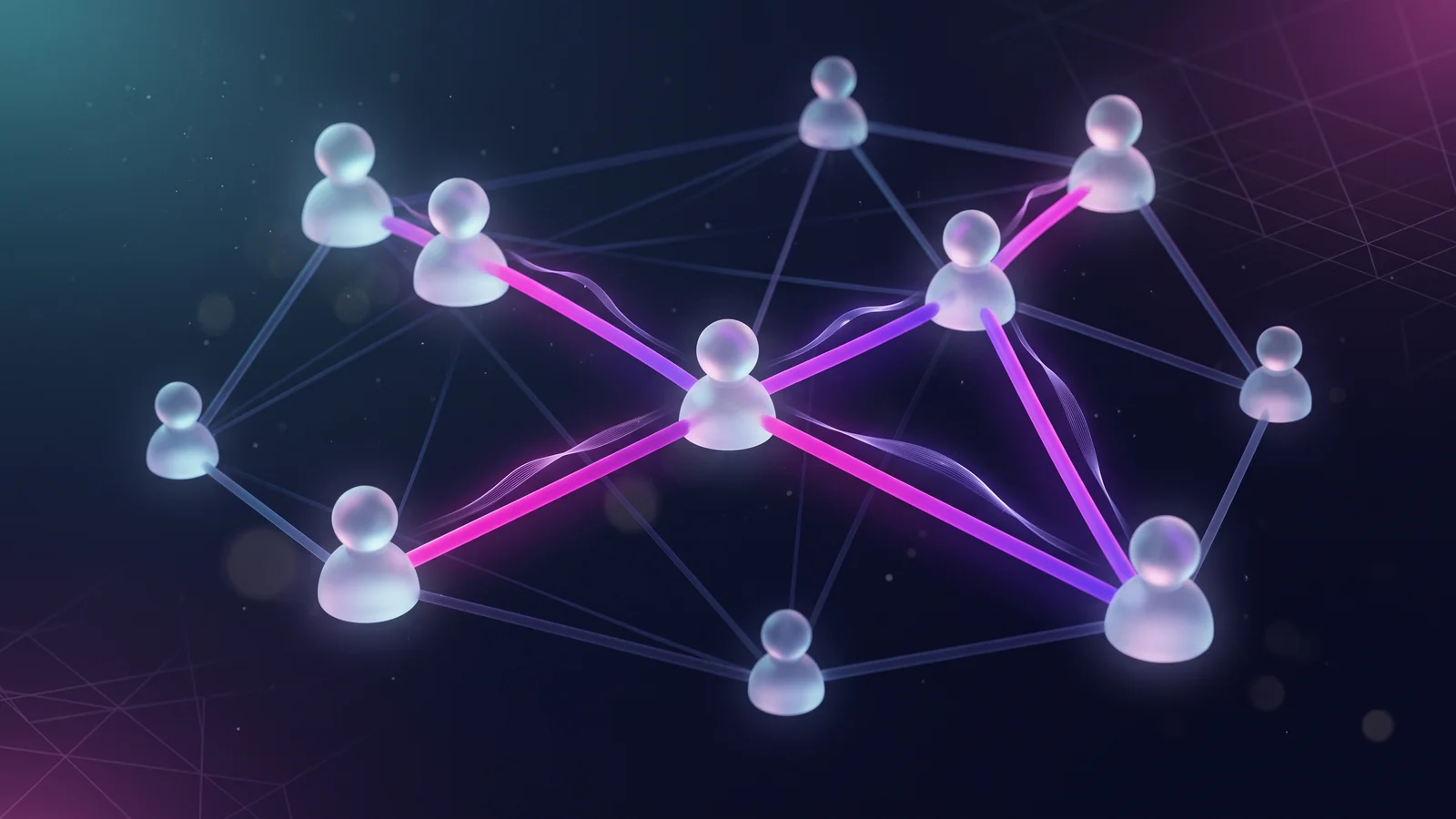 Suggest who should meet — and say whyRanked introductions carrying the shared interests, complementary fit and industry that produced each score. Live today.Read the story
 Catch the double-booked room before the programme goes outOverlapping sessions in one room, and speakers due on two stages, flagged while you are still editing. Fix suggestions: roadmap.Read the story
 Ask the console instead of hunting through itAn assistant on every screen, bound by your own permissions. Answering from your own event data is still being built.Read the story
 Let your own AI client run the event back office67 event tools, four resources and two guided workflows for the AI client you already use. Delete confirmation is roadmap.Read the story
 Right-size the room before registration closesForecast arrivals and no-shows per session, then turn both into capacity and staffing calls. Roadmap — the inputs exist already.Read the story
 A brief at T-30, T-7, T-1 — and a watch on the doorPlanned briefs before the event and live check-in alerts during it, with a clear line on what may run unattended. Roadmap.Read the story
AI you can actually let near your data
An AI-native product has to be governable. Here is where EventfullyManaged stands on each control — including the parts still being built.
Your workspace is the boundary
Every read confirms the event — and where it matters the attendee — belongs to your workspace before anything is fetched. Nothing crosses between customers.
AI gets your permissions, not more
The assistant and any connected AI client reach exactly what the person behind them reaches. There is no separate, privileged route into your event data.
Opting out means never being scored
A private profile is left out of matching in both directions. Asking for suggestions for someone who opted out returns an empty list, not a refusal you could detect.
It suggests; a person decides
Matches stay suggestions, and re-running never overwrites one you accepted or declined. No meeting is booked, no session moved and no message sent without a person.
Recorded, with personal details masked
Every action is logged with who did it and what happened, while attendee, speaker and lead emails, phone numbers, names and dates of birth are masked on the way in.
Evaluation and AI cost metering
Not built yet, and said plainly: no AI spend metering, no scoring of suggestions against real outcomes, no citations on generated text. These are launch requirements.
Models
No language model is wired into EventfullyManaged yet, and we would rather say so. What ships — match scoring and clash detection — is arithmetic over your own event. The assistant and the MCP tools let you bring the AI client you already use.
The honest answers
No. The matching that ships today is a straight calculation over the interests, asks and industry each attendee entered themselves. We could have waited, or dressed it up as AI. We shipped something explainable instead — every match arrives with a reason you can read and check.
Put EventfullyManaged’s AI to work
Your agenda, tickets, badge scans and networking profiles sit in one place — so EventfullyManaged can say who should meet and catch a double-booked room, and show its working.